
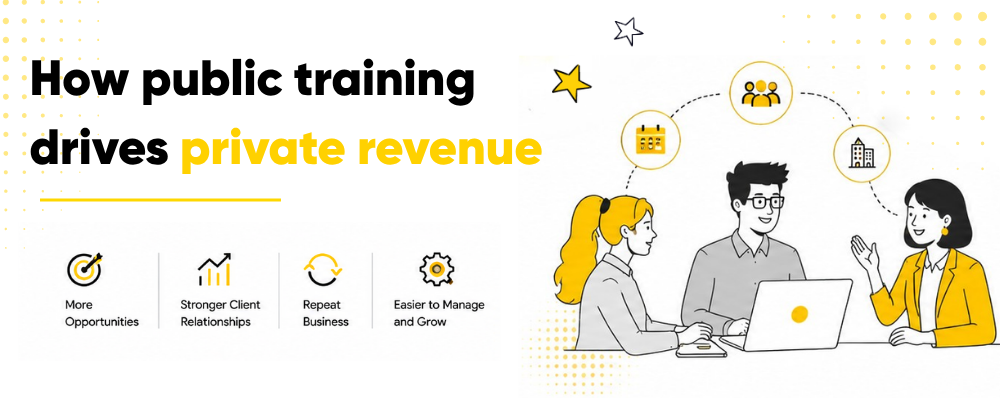
Private training is already a large part of many training businesses' revenue. The biggest challenges are in using public training as an effective driver of private revenue, handling it efficiently as it grows, and building the systems that turn one-off private contracts into long-term client relationships.
For many training providers, private training is where the biggest opportunities for growth exist. A single contract can be worth dozens of individual enrolments, relationships tend to last longer, and repeat business is often built into the model.
Yet many providers focus most of their marketing efforts on filling public courses, treating private training as something that happens separately.
In reality, the two are closely connected. Public courses are often the first place organizations encounter your training. They allow potential clients to experience your expertise, evaluate your delivery, and decide whether you're the right fit for a larger rollout.
The providers that consistently grow private revenue understand this. They don't see public and private training as separate parts of the business. They see public courses as a pipeline for future organizational relationships.
In this post, we'll explore how public training can become a powerful driver of private revenue, practical ways to turn attendees into long-term clients, and how the right systems can help you scale private training without creating additional administrative overhead.
Let’s first look at the definitions of both public and private training.
What is public training?
Public training, sometimes called open enrolment or open courses, is training that runs on a fixed schedule and is open for anyone to book. Courses are marketed broadly, priced per seat, and available to individuals or organizations looking to send one or two people.
It works well for testing demand for new topics, reaching individuals who are self-funding, and building awareness with organizations that aren't yet ready to commit to a private program.
What is private training?
Private training goes by a lot of names: in-house, bespoke, on-site, custom, off-site. The terminology varies by industry and region. But the model is the same: the client purchases training for a group of employees and may request content, examples, or delivery formats tailored to their needs.
The commercial upside is significant. Revenue per engagement is higher. Delivery is more predictable. And because you're working inside an organization rather than marketing to individuals, the opportunity to expand grows naturally from within the account.
For providers in regulated industries like health and safety, industrial training, or compliance, private training also comes with built-in renewal cycles. Clients return because they have to. The repeat business is structurally embedded.
Why public training drives private revenue
Public training does more than fill seats. It puts your training in front of the people and organizations that may later become private clients.
The individual attending your leadership course could become an internal advocate for a wider team rollout. The L&D manager who sends two employees to a public session may be assessing whether your training is a good fit for a larger programme. Even a learner who discovers you through search is giving you valuable insight into the skills and challenges their organization is trying to address.
The providers that grow private revenue consistently understand this. They treat every public course not as a one-off transaction, but as the beginning of a longer relationship.
That raises an important question: what happens after a public course ends?
Is the attendee in your CRM? Do you know which organization they came from? Is there a follow-up process in place? Has anyone reached out to explore broader training needs, or are you waiting for the client to make the next move?
Public training can be a powerful source of private opportunities, but those opportunities rarely convert by accident. The most successful providers have deliberate processes for identifying potential clients, nurturing relationships, and staying visible long after the course has finished.
Here are a few ways to turn public training into a more effective driver of private revenue.
Use public events as a sample of your private programs
One of the biggest advantages of public training is that it allows potential clients to experience your expertise before committing to a larger engagement.
Organizations rarely commission private training based on a brochure, website, or sales conversation alone. They want confidence that your content is relevant, your facilitators are engaging, and the learning experience delivers value. Public courses, webinars, and events give them a low-risk way to evaluate all of that firsthand.
When viewed this way, public training isn't just a revenue stream. It's also a demonstration of what you can deliver at a larger scale.
Masterclass UK, a bespoke training provider with over 30 years in business, runs free monthly webinars called Masterclass Minis alongside a series of interview-style spotlights. Between 50 and 150 people attend each time. The goal is explicit: showcase what Masterclass does so organizations can gauge whether it's worth commissioning privately.
The free event isn't content marketing for its own sake. It's a demonstration. It puts Masterclass's training directly in front of the decision-makers who commission private programs, before any sales conversation has started.

The same principle applies to any provider running public training. Every open course is an opportunity to showcase your content, facilitators, and learning experience to organizations that may later engage you for private delivery.
A well-run public course can be one of the most effective sales tools you have for private training. The question is whether you're treating it that way.
Build the relationship after the course ends
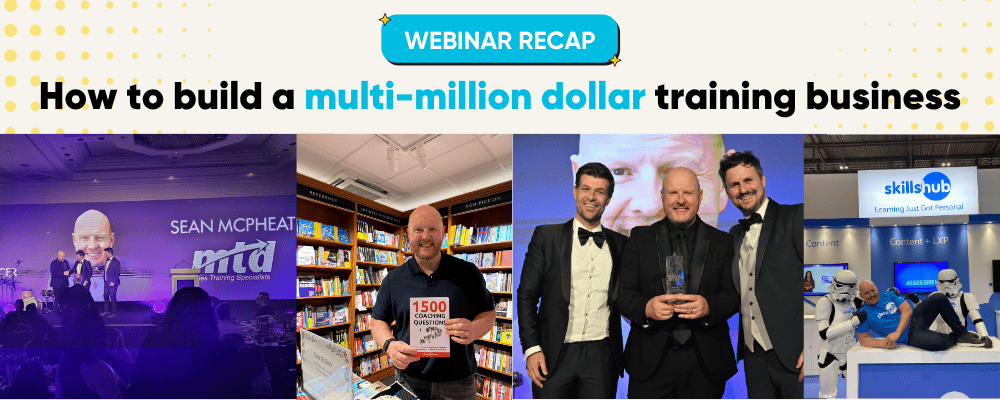
Sean McPheat of MTD Training puts repeat business at around 65% of MTD's revenue. That figure doesn't come from having the best training in the market. It comes from staying in front of clients between purchases.
Every MTD client receives weekly practical tips written by Sean personally. Account management touchpoints are built into every client relationship. When MTD launches something new, existing clients get early access.
"Revenue follows reputation," Sean said in Arlo's recent webinar on scaling instructor-led training. "But only if you stay visible."
A public course attendee who hasn't heard from you in six months is a cold lead. Build a follow-up sequence that runs after every public course. Not a generic newsletter. Something that references what they attended, offers related content or an upcoming programme, and opens a door to a private conversation.
For more tips on this check out our blog post on How training providers can use automated campaigns to increase repeat course enrolments.
Every public attendee is a private training lead
A public course attendee is more than a seat booking. They're a window into an organization. If someone from a 200-person company attends your course, that's not one potential client. It's one contact inside a company that could commission training for dozens of people.
Every attendee arrives with valuable information: where they work, what training they're interested in, and often what challenges their organization is trying to solve. Yet many providers treat that information as part of the registration process rather than part of the sales process.
Most providers don't systematically capture this data and as a result, valuable opportunities are missed. Registration data sits in a booking system. Nobody follows up beyond the post-course survey. The connection between the individual and their organization never makes it into a CRM.
The providers that grow private revenue consistently take a different approach. They use public training to build visibility into the organizations already engaging with them.
If three employees from the same company attend your courses over six months, that's a signal. If a client repeatedly enrols staff in compliance training, that's a signal. If learners from a particular organization keep booking the same topic, that's a signal too.
The challenge is being able to see those patterns and act on them.
Arlo's built-in CRM automatically stores every contact and links them to their organization, so you can see at a glance which companies are already sending people to your public courses. Is this the second or third person from the same firm to attend? That pattern is a buying signal, and it's one most providers miss because the data is never connected.
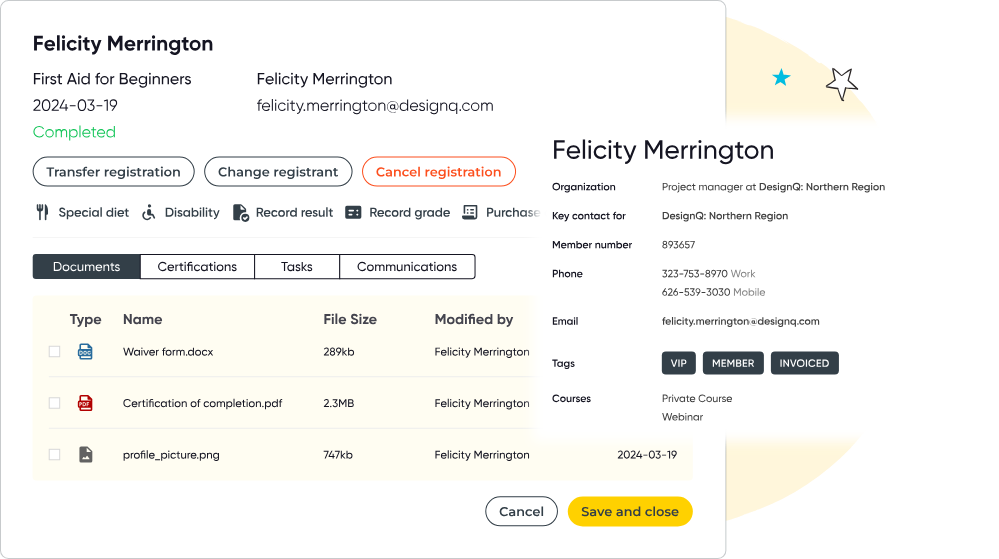
From there, automated remarketing campaigns let you follow up with past attendees based on what they booked, when they attended, and what's coming up next. You can target by organization, course type, or enrollment history, so your follow-up is relevant rather than generic.
For providers in compliance-driven industries, Arlo's certification and licence management adds another layer. When a learner's certification is approaching expiry, Arlo automatically triggers a renewal reminder. No manual tracking. No chasing spreadsheets. The client gets a timely nudge to rebook, and you get the repeat revenue without having to chase it.
The principle is simple: don't treat public attendees as individual bookings. Treat them as relationships with organizations that may have broader training needs. The more effectively you capture, connect, and act on that information, the more opportunities you'll uncover for private training.
Making private training easier to manage and grow
Winning more private training is valuable, but growth introduces a new problem: complexity.
Public course operations are increasingly automated. Registrations happen online, communications are triggered automatically, and certificates are issued without manual intervention.
Private training is often very different. Quotes are managed separately, learner lists arrive via email, client requests are tracked manually, and training records end up spread across multiple systems.
As private revenue grows, so does the administrative burden. Without the right processes, the operational overhead can start to erode the profitability that makes private training attractive in the first place.
That's why leading providers focus not only on generating private opportunities, but also on creating systems that make private training easy to manage at scale.
Arlo brings public and private training together in a single platform, giving providers one place to manage scheduling, registrations, communications, learner records, reporting, and client relationships.
For private training specifically, Arlo's Organization Portal gives client contacts direct access to their training activity - giving your B2B clients direct access to their own training without your team having to coordinate every update. They can register learners, track attendance, access certificates, monitor compliance, and request additional training without relying on back-and-forth email communication. Those requests flow straight into Arlo as leads, keeping your sales and delivery pipeline connected.
For compliance-heavy industries where clients need to track who's trained, when, and whether certifications are current, this kind of visibility becomes part of the value you offer, not just an operational convenience.
The result is a more scalable model for private training, one that allows providers to strengthen client relationships, increase repeat business, and grow revenue without adding the same level of administrative effort behind the scenes.

.svg)
.png)