
In Arlo's recent webinar, Karl Kapp unpacked where instructor-led training quietly breaks as it scales, and the operational, delivery, and AI shifts that let providers grow without drowning in admin.
Scaling a training business is hard. More cohorts, more formats, more learner communications, more instructors, more admin. And as everything grows, the gaps between those moving parts grow with it.
We sat down with Karl Kapp, professor of instructional technology and one of the most practical thinkers in modern learning, to talk about where instructor-led training breaks at scale and what to do about it. What followed was less a lecture and more a field guide: real stories, a few sharp metaphors, and a clear path from "drowning in admin" to "growing on purpose."
Here are four lessons worth keeping.
1. The friction you can't see is the friction that breaks you
Karl opened with a story about a colleague who spent every day telling everyone how little time she had, while somehow always getting her work done. The point wasn't that she was wrong. It was that she couldn't see her own time sinks.
That's how operational friction works in a training business:
- A registration re-keyed from an email into a spreadsheet
- A learner emailing to ask where the joining link is
- An invoice queried for the third time.
None of it looks like a problem. As Karl put it, a five-minute task done eleven times is an hour, and when you repeat those processes again and again, the hours really start to add up.
He gave this slow erosion a name that landed with the audience: not burnout, but rust out. The feeling of being worn down, not by big dramatic failures, but by the steady rain of manual processes and disconnected systems, doing the same thing over and over.
The fix starts with seeing it. Karl recommends a friction audit: for a couple of weeks, track where your team, your instructors and your learners actually lose time. Log the questions that keep coming up, the manual steps, the information you re-key. You'll be surprised what surfaces.
Then focus where it counts. As Karl reminded the audience, roughly 80% of your lost time comes from about 20% of these friction points, so fix that vital few first and you'll claw back the bulk of the time without solving everything at once.
With Karl’s help, we’ve built a simple template for exactly this. Grab "The Friction Test" template here.
2. Don't hire more axes. Pick up the chainsaw.
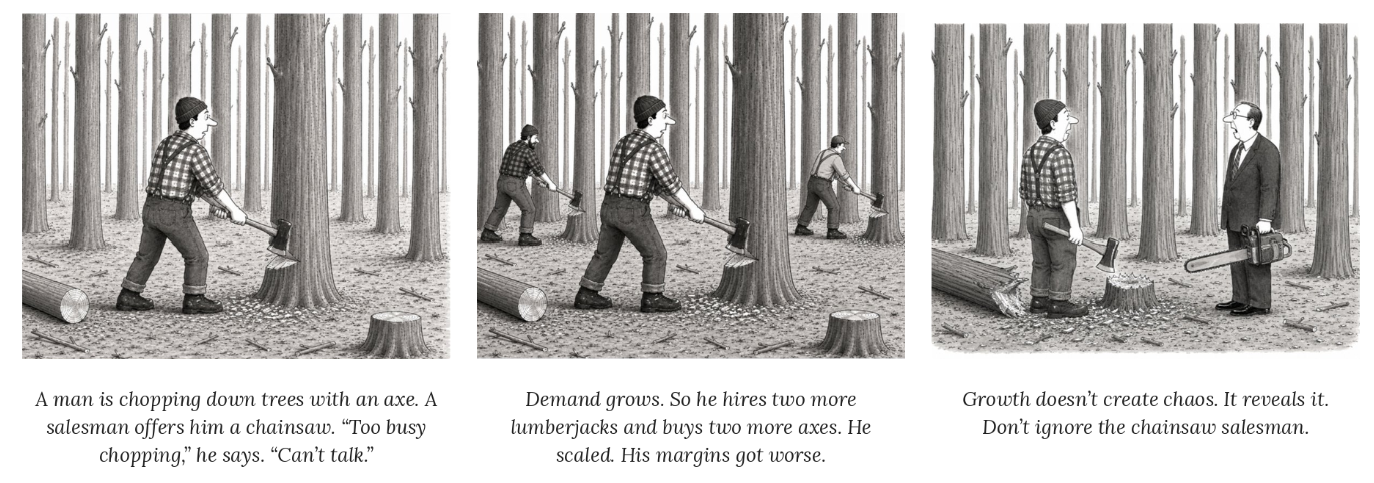
This was the metaphor of the session.
Picture a lumberjack chopping trees with an axe. Demand grows, so he does the obvious thing: hires two more lumberjacks and buys two more axes. He's cutting more trees. But now he's buying hats, more axes, more insurance in case someone loses a leg. He scaled, and his margins got worse.
Meanwhile a salesman keeps trying to show him a chainsaw, and the lumberjack keeps waving him off. "I'm too busy cutting down trees, I can't talk to you."
Every training provider has been this man. When you hit capacity, the instinct is to add people, and adding people is the expensive way to scale that quietly erodes your margins. Automating the repeatable work, by contrast, lets the team you already have cut down far more trees.
The axe still works. That's exactly what makes it dangerous. It produces real output, so it never quite feels like the wrong tool, right up until growth reveals that it is.
3. Blended learning multiplies your best instructors
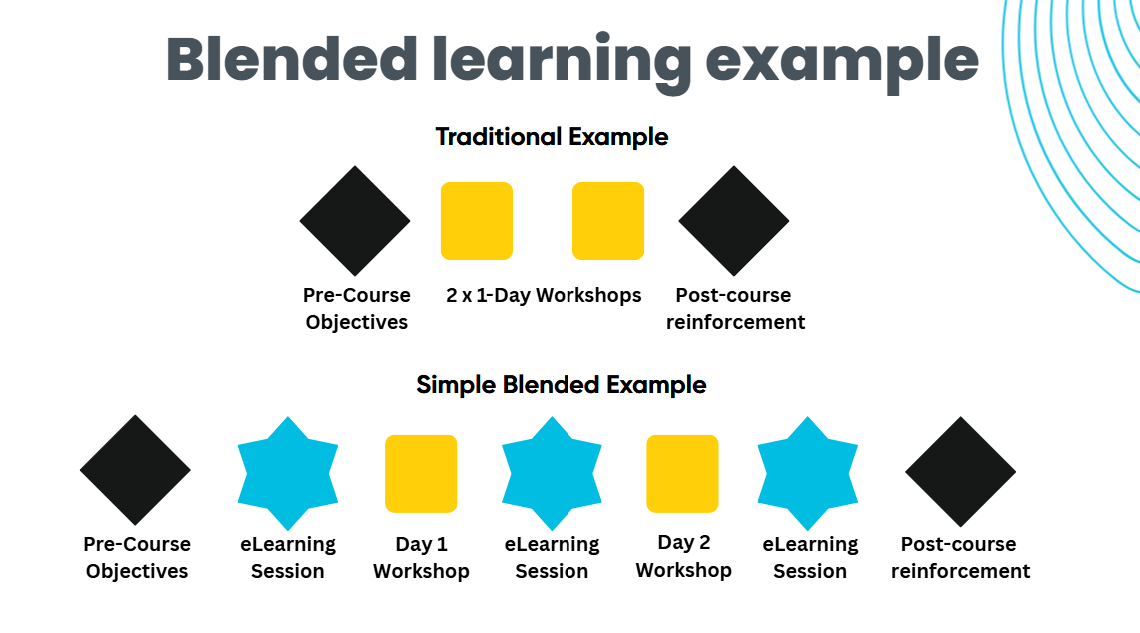
If automation is the chainsaw for operations, blended learning is the chainsaw for delivery. Karl was firm on one point: blended learning doesn't replace the instructor. It amplifies them. Take the burden of pure content delivery off your instructors, and you free them to do more of what only they can do.
Done well, blended learning also solves a real problem: cognitive overload. Instead of cramming everything into a two-day workshop until learners are fried, you spread learning across pre-work, live sessions and follow-up. Karl shared his own example, teaching a summer course where he offered students a mix of self-paced and live learning. They loved the flexibility, the live sessions got better because everyone arrived ready to apply, and his margins improved because he could offer more.
As he put it: learners aren't buying a course. They're buying mastery, the ability to apply what they've learned and perform. Content alone doesn't get them there. Content plus application does.
4. AI is a co-facilitator, not a replacement
Karl's take on AI is refreshingly grounded. AI's value in instructor-led training is augmentation, working alongside the trainer, not instead of them.
On content, AI collapses work that used to take days. Karl described taking his own slides and turning them into an interactive website, an infographic, a quiz and a PDF in minutes, with the crucial caveat that a human still has to check AI hasn't corrupted the content. This is how you finally tackle the "I never have time to create content" problem that so many providers named as their biggest bottleneck.
On delivery, he shared his favourite trick: an AI assistant he calls Jane, on his phone, that he banters with live during sessions to clarify concepts and generate industry-specific examples on the spot. He then shares Jane with learners to use before and after class.
Karl even built a game to teach instructional design concepts. You can try it here. It's a small example of a bigger shift: when content creation gets cheap, the differentiator becomes how engaging and interactive you make the learning.
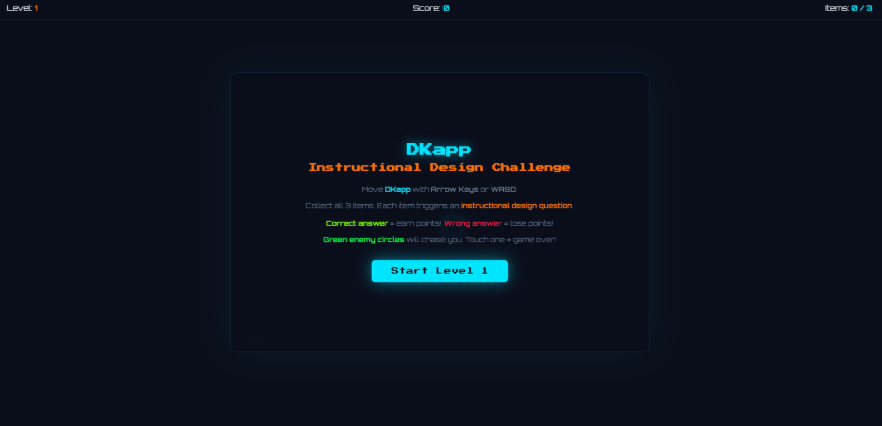
His framework for using AI across a session is worth stealing wholesale:
Before: an advanced organiser that gets learners thinking about the topic, doubling as a mini audience analysis so you know where to start.
During: a co-facilitator for examples, alternative viewpoints, and clarifying confusing concepts.
After: reinforcement and summaries that help knowledge stick instead of fading.
Notice what connects these four lessons?
None of them is about working harder, and none is really about a single feature. They're about redesigning how the work flows so that growth stops creating chaos.
As Karl summed it up: growth doesn't create chaos. Growth reveals it. The organizations that scale well don't add more instructors, more emails and more spreadsheets. They redesign the learner journey, and they reach for better tools instead of more of the same.
That's the shift Arlo is built for. It brings scheduling, registrations, payments, communications, elearning and certificates into one platform for public, private and blended training, so the operational work runs quietly in the background and your team's time goes where it matters.
If this session got you thinking about your next stage of growth, book a quick call and we'll show you what other providers are doing.
Start with the friction test
Karl's first piece of advice was the easiest to act on: find your friction points. We turned it into a simple two-week template, log where time leaks, rank by impact, and see the yearly cost in hours. Download the Friction Test here.

.svg)
.png)

.avif)