
Blended learning is a way of delivering a course to learners that combines a mix of instructor-led training, virtual instructor-led training and elearning. How the course is structured depends on the course, the learners, and the outcomes you’re trying to achieve.
Blended learning is not about adding a few videos or simply sending a long pre-reading PDF document before a five-day classroom-based course. It’s about deciding what should happen before, during, and after the live session. And what it’s going to achieve for your learners.
When it’s done well, blended learning prepares learners before training, creates better engagement during sessions and reinforces learning afterwards.
This is why blended learning consistently leads to stronger engagement and retention than relying on a single format alone.
In this article we’ll explore the five main types of blended learning models, how they work in practice and what they achieve, and how other training providers are already using them.
Types of blended learning models
There are five main types of blended learning models that are commonly used. Let’s look at them all, and some examples of how they’re used by real training providers.
1. The flipped classroom model
The flipped classroom model is one of the most common approaches in professional training. Instead of using instructor-led time to introduce concepts, learners cover the basics before the session. That might be through short elearning modules, videos, or reading materials. Live sessions are then used for discussion, exercises, and applying ideas.
In practice, this often looks like:
- Learners complete pre-work
- Attend an instructor-led training session
- Apply learning
- Follow up with reinforcement
Flipped model real-world example: BASICS Scotland
BASICS Scotland is a Scottish charity, dedicated to providing specialist training in pre-hospital emergency care for doctors, nurses and paramedics in Scotland, particularly those working in remote and rural locations.
They use a flipped approach across a lot of their courses.
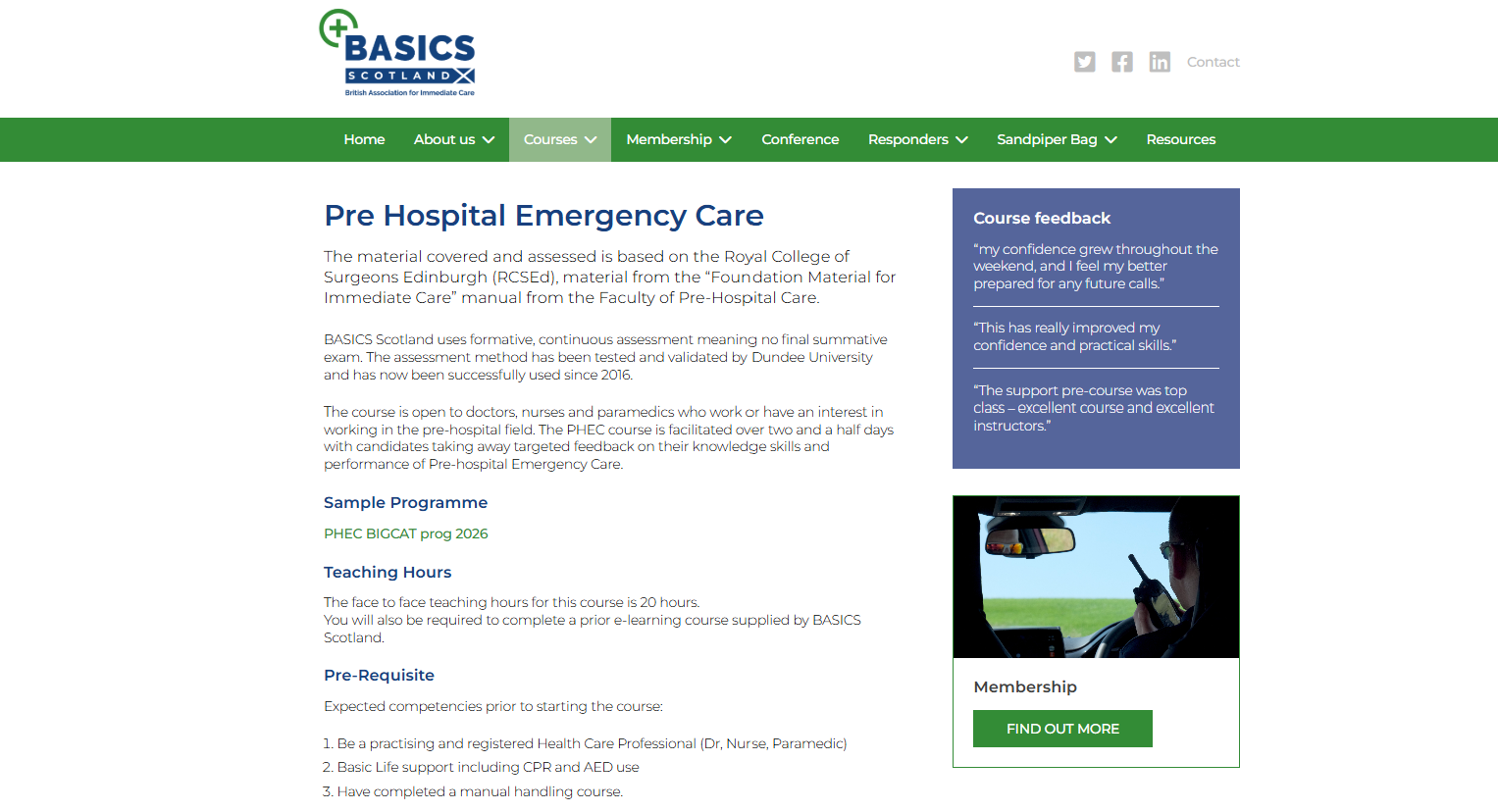
For example, let’s take a look at their Pre Hospital Emergency Care course. This course has been carefully structured to provide 21 hours of face-to-face learning, supported by 5 hours of pre-course online learning.
Pre-course learning - 5 hours
All knowledge transfer for the course takes place within 5 hours of pre-course work. This approach allows the instructor-led training session that focuses entirely on practical, hands-on, experiential learning. The content included in the pre-course work is not repeated during the course itself.
Instructor-led training sessions - 21 hours
Following the pre-course work, learners attend 3 days of face-to-face training. These 3 days are a mix of mentor groups, facilitated discussion, live demonstrations such as extrication from a motor vehicle and active skills teaching through scenarios such as airway management.
Each day is finished with a breakout session into mentor groups - an opportunity to discuss and clarify learning, ask questions and identify any further learning needs with your mentor.
This is the flipped model in practice - better prepared learners, and more valuable instructor time.
2. The rotation model
The rotation model mixes different formats throughout a program. Learners move between instructor-led sessions, elearning, and practical activities over time. This works well for longer programs where learning needs to build gradually.
Instead of delivering everything in one block, the course is broken into stages. Each stage builds on the last, giving learners time to absorb information, apply it, and come back with questions.
This model is often used when learners need time to practice between sessions, the content is complex and can’t be covered in one sitting and when measurable outcomes and assessments are important.
It also creates multiple touchpoints with learners, which helps reinforce learning and improves completion rates.
The rotation model real-world example: Parallel Project Training
Established in 2009, Parallel Project Training is one of the UK’s leading project management training providers, delivering courses for the Association for Project Management (APM) qualifications. They were the first company to introduce blended learning approaches for APM.
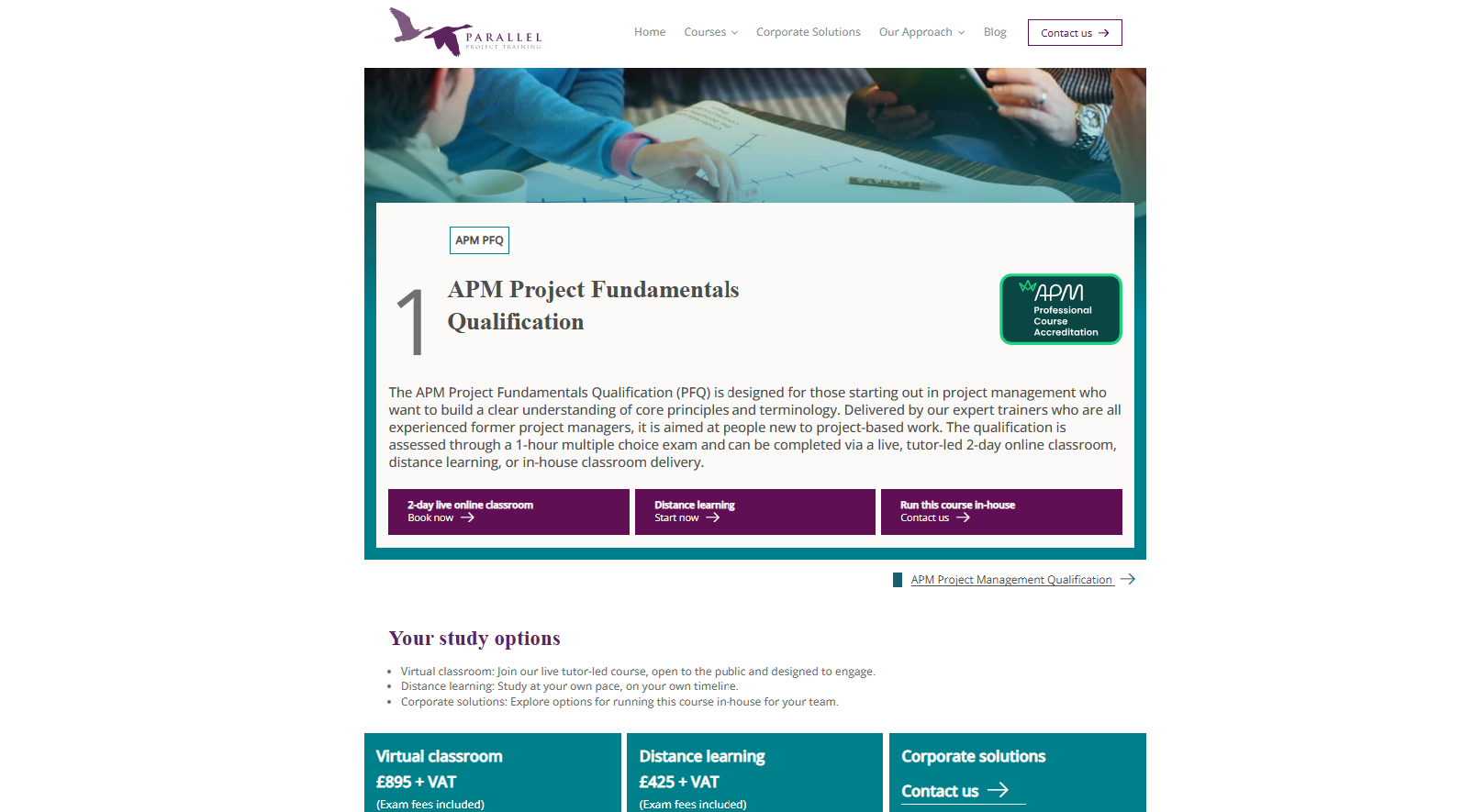
The APM Project Fundamentals Qualification is one of Parallel's blended learning courses - a practical course for new project managers or members of project teams who want a better understanding of the processes, tools and language of project management. The course can be taken either as a live online course or a 2 day face-to-face course and both options include access to elearning content.
This course includes the following components:
- APM PFQ study guide. A definitive guide to the course and explains in simple terms all of the topics in the syllabus and what you need to know to pass the APM PFQ exam, including sample exam questions.
- A two day tutor led course in which you will work through the content, completing practice questions and exercises.
- eLearning modules with bite-size video lectures.
- APM PFQ podcast series.
- One hundred and four sample multiple choice questions to check the learner’s progress with the course.
- A full sample exam paper.
- The online APM Project Fundamentals Qualification exam.
This creates a rhythm of learning, rather than a one-off event.
Learners engage with the material multiple times, which improves retention, application and measurable improvement in learner outcomes.
3. The flex model
The flex model is different from the other blended learning approaches.
Instead of structuring learning around scheduled sessions, the learning happens continuously, often in the flow of work, with instructor or assessor support layered in where needed.
In this model learners progress at their own pace, elearning modules provide structure, guidance and tracking and instructors act as coaches or assessors rather than traditional trainers.
This approach is common in vocational training, apprenticeships and competency-based qualifications, where the goal isn’t just knowledge transfer, it’s proving real-world capability.
Flex model real-world example: GEM Compliance Training
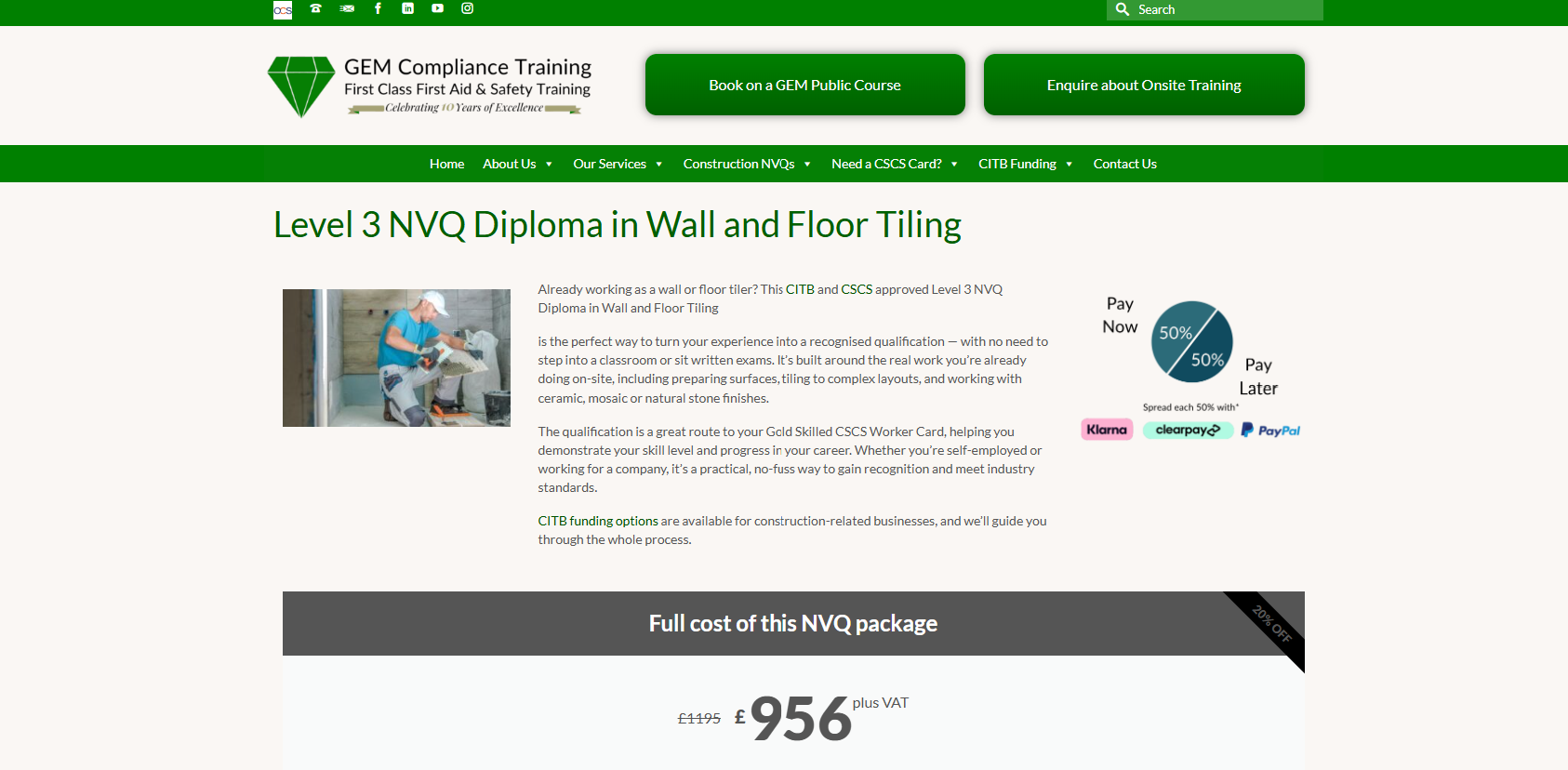
GEM Compliance Training delivers NVQ qualifications in construction and trade environments, including their Level 3 NVQ Diploma in Wall and Floor Tiling. This is a clear example of the flex model in practice. Instead of attending a classroom course, learners complete the qualification while working on-site. Their day-to-day work becomes the learning experience. Learners collect evidence of their work, such as photos, videos and written observations, which are submitted and assessed against the qualification criteria. Each learner is assigned an assessor who provides guidance, reviews evidence and carries out assessments through discussions or site visits.
Online learning tools are used to track progress, manage evidence and support communication between learners and assessors. There is no fixed timetable or classroom delivery. Learners progress as they build evidence and demonstrate competency.
This model works because it reflects how people actually learn in these environments.
The learning isn’t separate from the job, it’s embedded within it.
4. Cohort model
Many training providers use a cohort-based approach. Learners move through a course together, combining elearning with scheduled instructor-led sessions. This keeps the accountability and shared experience of instructor-led training, while adding the flexibility of elearning. The key strength of this model is structure. Learners start together, progress together, and often finish together. This creates momentum and encourages participation, especially in longer programs.
It also creates space for peer discussion, shared experiences and group problem-solving.
For many providers, this is where blended learning really comes to life, combining flexibility with human connection.
Cohort model real-world example: cLearn
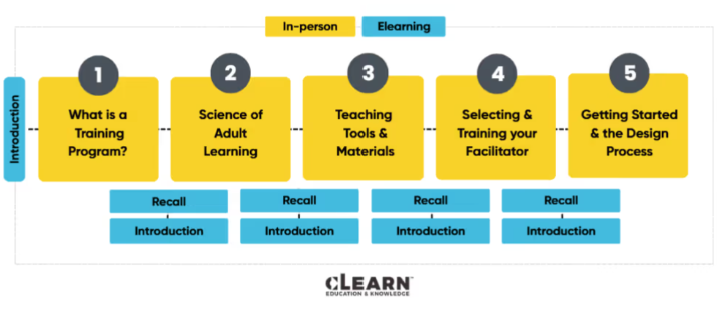
In our recent webinar on designing innovative blended learning, Jeff Makey shared how cLearn structures its courses in stages, based on the cohort model.
For cLearn’s Instructional Design Certification course, the course blends instructor-led sessions with short, focused online modules that reinforce learning between workshops. The formula is simple - each cohort attends a course with introduction, ILT session, recall, introduction, repeat.
- Pre-course learning to introduce key ideas
- Instructor-led sessions for discussion
- Practical activities between sessions
- Follow-up content to reinforce learning
This creates stronger engagement, because learners aren’t going through the experience alone.
5. Enriched virtual model
This model is designed for flexibility, without losing the value of instructor-led training. It’s particularly useful for distributed or global audiences, time-poor learners and organizations that need consistent delivery across locations. Most of the learning happens online, but learners still attend structured live sessions, usually delivered virtually.These live sessions are a core part of the experience. They’re where learners ask questions, work through real scenarios and apply what they’ve learned.
Training providers delivering across multiple regions often combine self-paced modules, live virtual workshops, interactive exercises and follow-up learning. This allows them to scale delivery without losing the interaction that makes training effective.
Enriched virtual model real-world example: SAFE Ltd
SAFE Ltd(Safeguarding Associates for Excellence) is a UK-based training provider specialising in child and adult safeguarding. From child protection and exploitation, to managing allegations, adult safeguarding, safer recruitment, and sexual harassment awareness, SAFE equips professionals with the tools they need to respond confidently and appropriately in high-stakes situations.
For courses such as their Level 3 Safeguarding Children training, SAFE uses a blended approach that combines online learning with live virtual sessions. Learners begin with self-paced online modules that introduce key safeguarding concepts, frameworks and responsibilities.
This is then followed by a live virtual session with an experienced trainer. During these sessions, learners work through real safeguarding scenarios, discuss challenges they face in their roles and ask questions specific to their context. The sessions are interactive and tailored to the group, making the learning highly relevant and practical.
This approach gives learners the flexibility to complete training around their schedules, while still keeping the human interaction that makes safeguarding training effective.

How training providers deliver blended learning with Arlo
All of these blended learning models sound great in theory. But for many training providers, the real challenge is delivering them in practice.
Managing instructor-led sessions, elearning modules, registrations, communications and reporting across multiple systems quickly becomes complex. Many moving parts, lots of administration and often multiple, disjointed systems that come with high cost and a poor learner experience.
That’s where many providers get stuck. They end up juggling spreadsheets, separate learning platforms, webinar tools and manual processes just to run a single course. The result is more admin, not less.
Training providers using Arlo take a different approach.
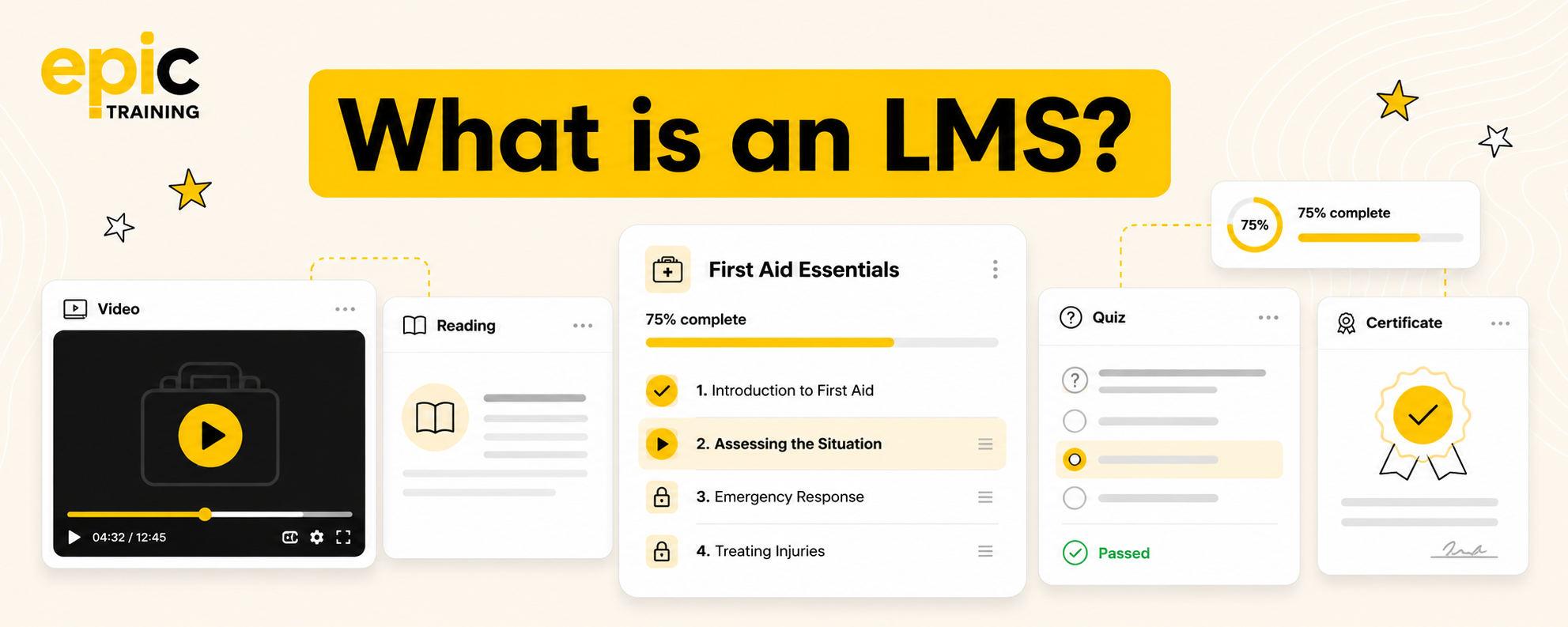
Arlo brings everything together into one platform, making it easy to deliver blended learning without adding operational complexity.
With Arlo, providers can:
- Schedule instructor-led and virtual sessions
- Create and deliver elearning and pre-course content
- Automate communications, reminders and follow-ups
- Track learner progress and completion
- Manage registrations, payments and certificates
All in one place with course registration software like Arlo.
Blended learning isn’t just about better course design. It’s about delivering those experiences in a way that works for your business. The training providers doing this well aren’t relying on disconnected tools or manual processes. They’re using platforms like Arlo to simplify administration, run more courses and deliver better learning experiences.
Because when the admin is taken care of, instructors can focus on what they do best. Delivering training that actually makes a difference.
.svg)

.avif)