
At Arlo, we champion instructor-led training, but the benefits of blended learning can’t be ignored. It has quickly become one of the most effective ways to deliver modern learning – for good reason. In this article you’ll learn how to build a blended learning course step-by-step, including practical design tips, examples from real Arlo customers who are delivering successful blended learning courses, and common mistakes to avoid.
Instead of relying solely on classroom sessions or fully online courses, blended learning combines instructor-led training, live online sessions, and self-paced elearning into a single learning journey.
For training providers, this approach unlocks the best of both worlds:
- The human connection and expertise of instructors
- The flexibility and scalability of digital learning
But designing a successful blended learning course requires more than simply adding elearning modules to a classroom program.
What Is a Blended Learning Course?
A blended learning course combines multiple learning formats into one structured program.
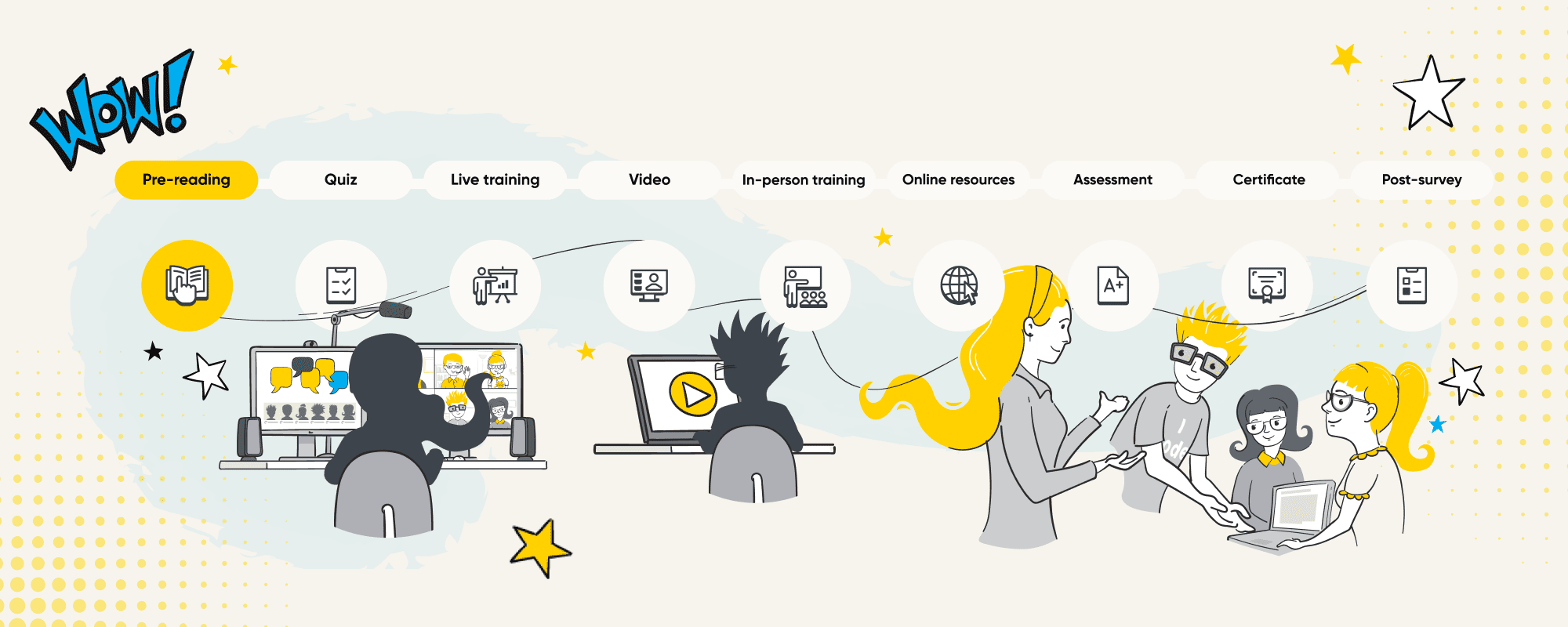
These formats typically include:
- Pre-reading materials
- Instructor-led classroom training
- Live virtual sessions
- Self-paced elearning modules
- Videos and microlearning
- Quizzes or assessments
- Post-course reinforcement activities
Instead of delivering everything in a single session, the learning experience unfolds over time.
This approach improves engagement, retention, and learner outcomes. It also reflects how people actually learn: through interaction, reflection, and practice, not just information transfer.

Why Blended Learning Works
Many organizations initially adopted blended learning to make training more flexible or scalable. But its real power lies in how it combines technology with human learning experiences.
At Arlo, we believe great training isn’t about replacing instructors with technology. It’s about using technology to create more meaningful learning experiences.
Instructors bring something that elearning alone cannot replicate:
- Real-world insight
- Coaching and feedback
- Discussion and reflection
- Human connection
But when elearning is thoughtfully blended with instructor-led training, it strengthens those moments by:
- Preparing learners before the session, so valuable instructor time isn’t spent covering the basics
- Creating space for deeper discussion and hands-on learning during live sessions
- Reinforcing key concepts after training, helping knowledge stick long after the course ends
- Giving learners the flexibility to revisit content whenever they need it
Blended learning works because it allows training providers to use each format for what it does best. Combining the efficiency of elearning with the impact of human-led training.
How to Build Blended Learning Courses
Step 1: Start With the Learning Experience
The biggest mistake training providers make when designing blended courses is starting with technology instead of learning design.
Instead, begin with the learner.
In a recent Arlo webinar on designing innovative blended learning, Jeff Makey, CEO of cLearn, explained that their course design always begins with the learner experience.
“We ask what will make the learning easier, more accessible, and more meaningful for participants.”
Ask:
- What skills or knowledge should learners gain?
- Where will they need practice?
- When will instructor guidance add the most value?
Once you understand the journey you want learners to go through, you can then decide which delivery methods support that experience best.
Step 2: Break Your Course Into Learning Moments
Traditional training often packs everything into a full-day, or multi-day, workshop.
Blended learning spreads learning across multiple shorter experiences, making it easier for learners to absorb information and apply it.
Instead of a one-day course, a blended program might look like this:
- Pre-course elearning module (20 minutes)
- Instructor-led workshop (3 hours)
- Practice activity
- Post-course quiz
- Additional learning resources
Breaking training into smaller learning moments helps learners arrive prepared, stay engaged during sessions and reinforce knowledge retention.
This structure also frees instructors to focus on discussion, coaching, and real-world application rather than delivering basic information.
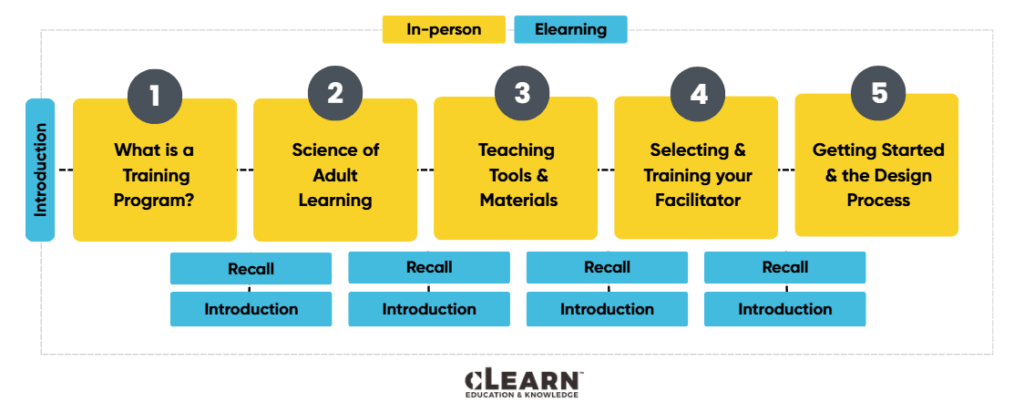
Here’s an example of a blended learning course that Jeff Makey developed for cLearn’s Instructional Design Certification course.
Step 3: Decide What Should Be Online vs Instructor-Led
Not every part of a course belongs in the same format.
A useful approach is to match the learning method to the learning objective.
Best suited to elearning:
- foundational knowledge
- theory and definitions
- compliance training
- background reading
Best suited to instructor-led sessions:
- group discussion
- case studies
- coaching
- complex problem solving
- practical exercises
Best suited to post-course reinforcement:
- quizzes
- microlearning refreshers
- recap videos
- reflection activities
By carefully deciding what belongs where, you ensure instructor time is used where it creates the greatest learning impact.
Step 4: Repurpose Your Existing Training Content
One of the biggest concerns training providers have about blended learning is that it requires creating entirely new digital courses from scratch. In reality, most training organizations already have the content they need.
Your expertise already exists in materials like:
- slide decks
- workbooks
- recorded webinars
- exercises and case studies
- course manuals and PDFs
These resources can often be repurposed into digital learning components such as:
- short microlearning modules
- explainer videos
- downloadable resources
- quizzes and knowledge checks
Many providers start by digitizing the preparation or reinforcement parts of their course. For example, pre-course learning or post-course revision activities.
Modern tools are also making this process dramatically easier, to turn existing content into interactive learning.
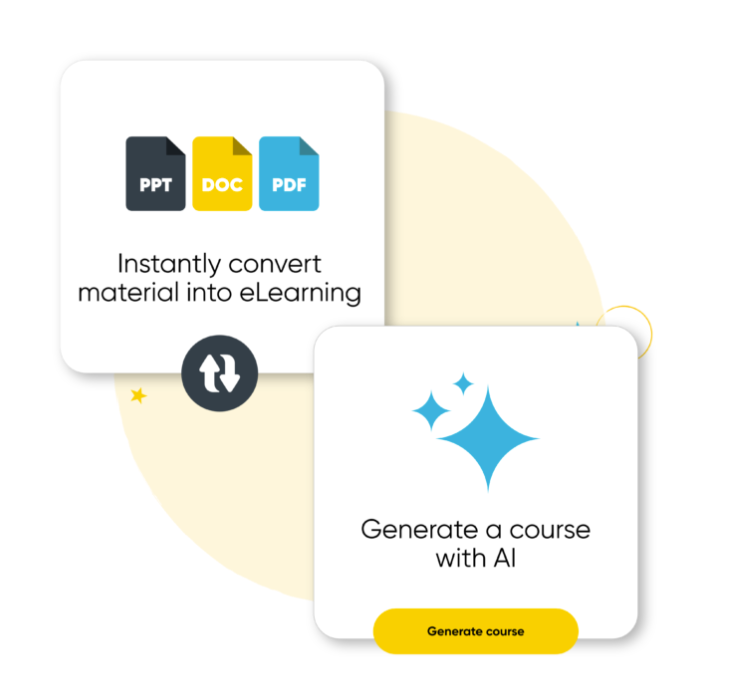
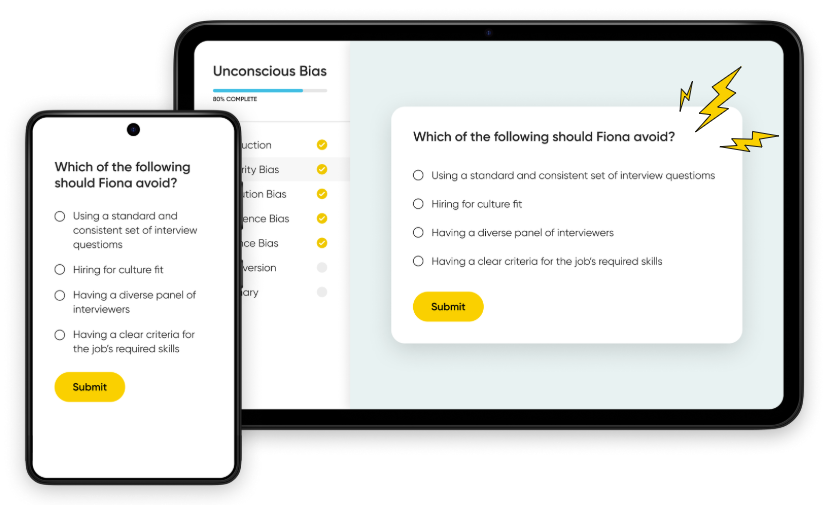
In Arlo, for example, training providers can upload existing course materials, including documents, slide decks, or SCORM packages, and deliver them alongside instructor-led sessions in the same system.
During a recent Arlo webinar on delivering impactful elearning, Arlo’s Product team demonstrated how providers can upload their existing SCORM elearning modules and instantly make them available to learners within their course programs.
This allows providers who already have elearning content to integrate it seamlessly with their instructor-led training, without needing a separate LMS or complex integrations.
For providers who want to go further, new AI-powered tools are lowering the barrier to interactive learning design.
Many training providers are subject-matter experts rather than instructional designers. They know their material deeply, but traditionally turning that knowledge into digital learning required specialist tools and significant time.
With Arlo’s AI-powered course creation, instead of starting from a blank page, providers can now upload existing materials and use AI to help structure them into interactive elearning modules.
Providers drag and drop documents, PDFs or slide decks into the platform. Generative AI converts this content into structured elearning modules in real time, generating lesson outlines, objectives, quizzes and knowledge checks.
Using a built-in visual builder, providers edit content, apply branding, embed media and refine tone with AI prompts, all inside the system they already use to run their business.
This dramatically reduces the time required to transform existing training into blended learning experiences.
Step 5: Create a Clear Learning Flow
The best blended courses follow a consistent learning rhythm.
A simple structure used in many programs is: Prepare. Learn. Practice. Reinforce.
For example:
Week 1: Pre-course elearning module
Week 2: Instructor-led workshop
Week 3: Practical activity or assignment
Week 4: Follow-up quiz or reflection exercise
This cycle ensures learners engage with the material multiple times, which significantly improves retention.
It also creates opportunities for instructors to support learners throughout the journey, rather than only during a single event.
Step 6: Manage Blended Learning Without Adding More Administration
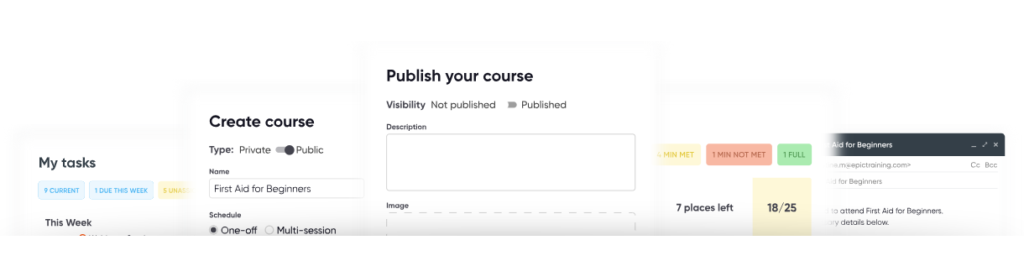
Designing a blended learning course is only half the challenge. The real complexity often comes from managing all the moving parts – live classroom or virtual sessions, self-paced elearning modules, assessments and quizzes, automated reminders and communications, certificates and completion tracking.
Many training providers try to manage this across multiple disconnected tools – an LMS for elearning, scheduling software for courses, ecommerce systems and spreadsheets for registrations, task management, and more. The result is often more administration, more integrations, and more complexity.
Modern training management systems like Arlo allow providers to manage the entire learning journey in one place.
With Arlo you can:
- Schedule instructor-led training
- Create elearning
- Deliver seamless blended learning
- Automate learner communications
- Track progress and engagement
- Issue certificates
- Manage registrations and payments
All within the same system.
Ready to take your training to the next level?
Inside the Ultimate Guide to Training Management Systems, explore how world-class training businesses streamline operations, deliver exceptional learner experiences, and scale with confidence.
With elearning content creation and delivery in the same system that manages your entire training business, training providers can offer flexible blended learning programs without adding operational overhead.
A unified platform also creates a much smoother learner experience.
Instead of navigating multiple systems, learners can access everything they need through a single portal, including:
- Course materials
- Session details
- elearning modules
- Assessments and results
- Certificates and resources
- Past training history
A seamless journey from registration to certification.
At Arlo, we built our platform around a simple belief: technology should empower the delivery of exceptional learning, not replace the human connection at its core.
Training providers deliver some of the most important learning in society – from healthcare and safety to professional development and specialized industry training. The quality depends on expert instructors, real-world discussion, and shared learning.
The role of technology is to remove the operational friction around delivering that training – simplifying administration, connecting the learning journey, and giving instructors more time to focus on what they do best. Delivering more impactful learning.
When blended learning is managed well, technology fades into the background and the learning experience takes center stage.
Common Blended Learning Mistakes to Avoid
Trying to digitise everything. Blended learning works best when digital learning supports instructor-led experiences, not replaces them.
Overloading learners with content. Short, focused learning modules perform far better than long elearning sessions.
Designing around technology instead of learners. Always start with the learning experience, not the platform.
Blended learning is transforming how training providers design and deliver courses. By combining the expertise of instructors with the flexibility of digital learning, providers can create training experiences that are more engaging, more accessible, and more scalable.

.svg)