

This post is part of a series on findings from the State of Instructor-Led Training 2027 report. The report is the first global benchmark built specifically for ILT providers, produced by Arlo with The Training Marketplace. It combines responses from training providers around the world, buyer search data, and commentary from an advisory panel of industry leaders. All figures below are shares of the providers who answered each question.
Here’s the finding that surprised us most.
Demand beats AI
We asked providers to pick their top three challenges. Generating demand and course registrations came first. Adapting to AI came second.
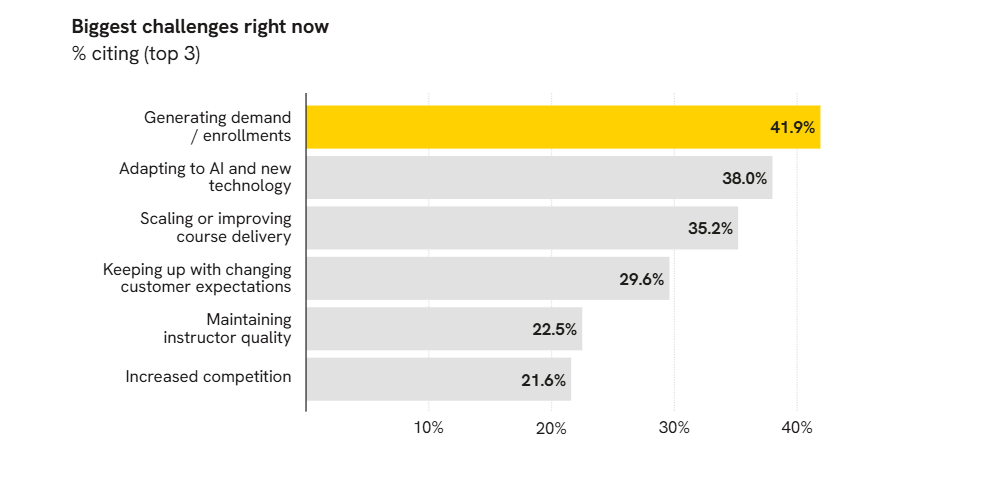
Most of the conversation in training right now is about AI. For the providers running the training, the more pressing problem is still filling the room.
Word of mouth does most of the work
We also asked which channels bring in their most qualified leads. One answer sits well ahead of the rest.
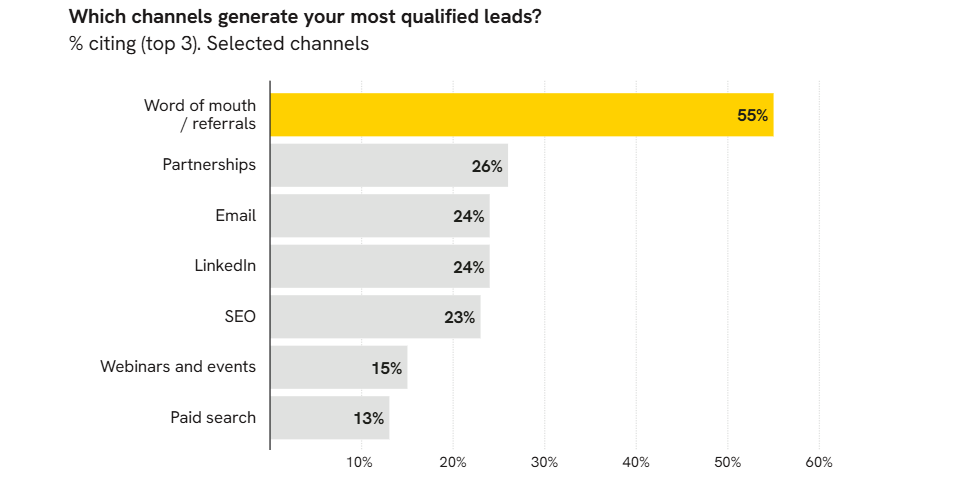
Word of mouth brings in more qualified leads than the next two channels combined (55% against 50%).
That’s a good problem to have. People who send you work are telling you the training is good. But referral is slow, it’s hard to systemize, and it doesn’t compound the way a channel you own can. You can’t schedule it, forecast it, or turn it up for a quiet quarter.
The decision is mostly made before anyone contacts you
This isn’t unique to training. Research from 6sense, based on close to 4,000 B2B buyers, found that 94% rank their shortlisted vendors in order of preference before they contact any of them. Buyers research quietly and decide early.
That research covers B2B buying in general, not training specifically, so treat it as context rather than proof. But it fits what providers are telling us. A referral can put you on the shortlist. It only helps if the buyer can also find you, and understand what you offer, when they check.
How a buyer finds you when they check is changing too. On our live panel, Scott D’Amico, General Manager, Certification at PSI, said AI has changed how search works:
“The world of search engine optimization has changed over the past 24 months, because of how the AI models want to consume the information through your website. How you focus on organic SEO two years ago is completely different today.”
Scott D’Amico, General Manager, Certification, PSI

What training buyers actually type
The Training Marketplace’s section of the report looks at the other side of the table. Between 1 January and 13 August 2026, its platform logged 10,077 buyer searches from 9,131 organizations.
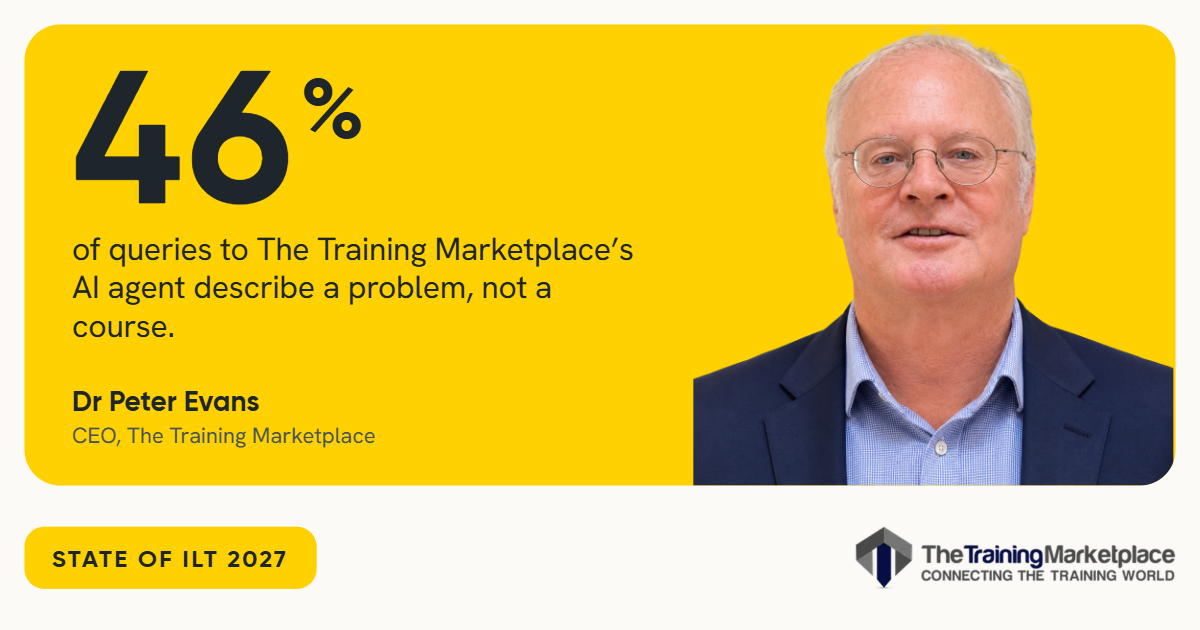
When buyers browsed the course database, 2% of queries described a problem. When they used the conversational assistant, 46% did. Here’s what they typed:
“Our spreadsheets are doing the job, but no one fully trusts them.”
“Our managers avoid difficult conversations and accountability is slipping.”
Nobody asked for a course. They described what was going wrong. As Dr. Peter Evans puts it in the report, a listing built around a syllabus is invisible to a buyer describing a symptom.
About The Training Marketplace
The Training Marketplace (TheTM.com) is a B2B marketplace connecting corporate training buyers with verified training providers. Buyers search for free, or describe their challenge to TaMi, our AI agent, and are matched with providers who fit. For providers, that means being found by organisations actively looking for training, with live requests, matched briefs and insight into which buyers are viewing their profile. Basic listings are free for life.
3 months free membership with The Training Marketplace
The Training Marketplace is offering survey respondents three months of free Membership (worth £450), plus their first outbound campaign at the member rate of £250 instead of £750. That’s £950 of value. Members see live buyer requests 48 hours before anyone else, get matched to briefs from verified corporate buyers, and can see which companies are viewing their profile. Our outbound campaigns put your expertise in front of decision-makers who buy training. No contract, cancel anytime. Offer ends November 30, 2026. Promo code: ARLOTTM26.
If you have any trouble applying the code, please email t.nguyen@thetm.com.
Standing out, in a provider’s words
Demand is a today problem, and providers expect the pressure to build. Looking two years out, three forces sit effectively level as the biggest impact: AI in content creation (37%), increased competition from low-cost providers (36%), and pressure on pricing (33%) (n=408).
One respondent put the commercial version of this plainly:
“There’s too many self-learning courses that do not provide much value to the client... My goal is to give quality training that businesses know they will receive a huge ROI from.”
Owner/Founder, independent training provider, Europe
What to do with this
These are our suggestions, not findings from the report.
- Describe the problem a course fixes. If buyers search by symptom, a course description that starts with the symptom is easier to find, and easier for a happy client to repeat to a colleague.
- Treat public courses as a front door. Private and in-house training beats public courses by about 2x on revenue, profit and repeat bookings, but public courses come out ahead on lead generation (41% say public contributes more, 30% say private). The report’s read is that public courses are where buyers discover you and private work is where the money sits.
- Add one channel you control. Partnerships (26%) and email (24%) are the next best after word of mouth. Pick the one closest to the people already recommending you, and give it a regular slot in your week.
Get the full Instructor-led Training 2027 Report
The report goes further on all of this, plus private vs public performance, AI adoption, pricing and profit, measurement, and how providers run their operations. It’s free to download.
Download the State of Instructor-Led Training 2027 report.