

In this series, Arlo CEO Chris Teeling shares the stories of Arlo customers and the incredible impact they’re making through training, the future of learning and why instructor-led training matters more than ever.
In Part 1 of this series, we looked at why instructor-led training (ILT) matters more than ever. In this second post, I want to focus on the shifts that have redefined learning delivery and what we can learn from them as we navigate the rise of AI.
For decades, face-to-face ILT was the dominant mode of professional training. Its strengths are clear: deep instructor knowledge, lived experience, and peer-to-peer engagement.
The arrival of early elearning platforms changed the equation. Training could be delivered faster and cheaper, with the promise of scalability. For some, this was seen as a threat to ILT. For others, it was an opportunity.
The lesson? Technology always shifts delivery models, but the fundamentals of learning - connection, context, and outcomes - don’t disappear.
The pandemic accelerated this trend at breakneck speed. Overnight, classrooms moved online. Self-paced eLearning surged. Many wondered if ILT would survive.
But evidence quickly emerged of its limitations. Research has shown that self-paced courses often struggle with low completion rates and weaker knowledge retention. Average completion rates for self-paced online courses are 5-15%.
Arlo customers saw the same thing play out - learners craved the interaction, depth, and connection that ILT brings.
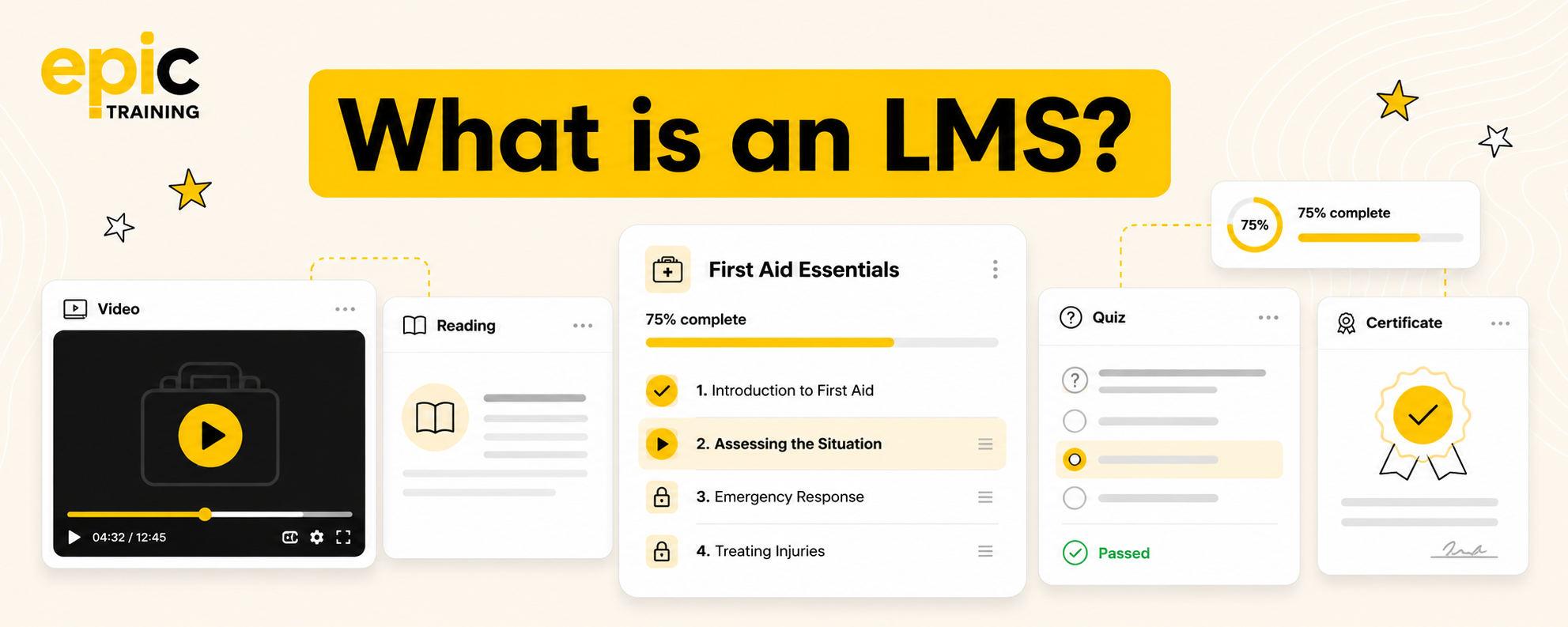
ILT didn’t vanish. It came back stronger, often in blended formats to prepare learners, reinforce skills, and extend the impact of classroom time. Today, our research indicates up to 75% of ILT providers are delivering in a blended format. Some are as simple as pre-course videos, or reading materials, whereas others have fully integrated elearning modules, with quizzes and assignments.
AI: the next curve
AI is the latest disruption, bringing both excitement and concern. As someone who has built technology and services businesses through the dot com and cloud era, the pattern feels very familiar.
I had the chance to watch our recent webinar with Donald H. Taylor and an all-star panel of experts - Stella Lee, Elena Agaragimova, and Scott D’Amico. What struck me most wasn’t just the panel discussion, but the energy in the chat: a whopping 283 comments from training providers around the world sharing what excites them about AI and what concerns them. It was one of the most engaged sessions we’ve hosted.
The messages were clear. Trainers worry about a “beige wave” of mediocre content, but they also see opportunities to use AI to accelerate development, increase accessibility, and to reinforce the learning while keeping learners connected beyond completion of a course..
One of the most insightful points came from panelist Stella Lee, who cautioned:
“We don’t need more courses or content, and certainly don’t need poor content faster. AI won’t automatically transform irrelevant or mediocre material into something useful and impactful. We have to stay focused on outcomes and quality.”
That sentiment resonated strongly across the chat. As Mel from our Arlo team put it:
“What excites me is when AI and authoring tools don’t just pump out content, but actually help create a seamless blended learning journey - where online elements support and enhance the experience, while instructor-led training remains the hero. That’s the real clincher.”
Taken together, these perspectives highlight where AI’s true value lies: in augmenting ILT, not replacing it. The future of AI is definitely human centered, and not just 'instructor in the loop’ - but you're all front of stage.
At Arlo, this is exactly the vision behind our elearning functionality and AI-powered course authoring tools. They’re designed not to replace instructors, but to help providers create and deliver pre-reading, microlearning, quizzes, videos, and assignments as part of a modern blended learning journey. The goal is to free up time and cut down on admin so that ILT can continue to shine where it adds the most value.
Lessons training providers can take forward
Looking across these shifts - from eLearning adoption, to the COVID acceleration, to today’s AI curve - a few lessons stand out:
- Technology surges, then rebalances. Each wave brings disruption, and expectations that overshoot the mark, but human-led needs such as in learning prove where the value is.
- Blended learning is the future. The strongest models combine ILT with digital tools for personalized preparation, feedback loops, reinforcement, and practice.
- Outcomes matter most. Learners and employers are less concerned with the delivery method than with what skills stick and how peoples improved performance creates new value.
- Diversification is growing. 75% of ILT providers are delivering in a blended format, and half of Arlo customers now deliver tailored private training, reflecting new ways providers are adapting to market demands.
The road ahead
With so much change, the need for upskilling and training is bigger than ever. But the world of training doesn't come without its challenges...
Pressure on budgets. Learner attention spans are shrinking. The need to prove impact is increasing. And now, AI is raising concerns - from fears of “automated mediocrity” to questions about intellectual property and the future role of instructors.
These aren’t small challenges. They reflect the reality that training providers are being asked to do more with less, while keeping quality and outcomes front and center.
Yet if history teaches us anything, it’s that instructor-led training has intrinsic value and is remarkably resilient. Time and again, when new technologies disrupt the market, we all adapt, evolve, and come back stronger with the learner at the center.
At Arlo, we’re already charting the course to support providers to not just face into AI - but to leverage it to build even better organizations and learner experiences. That means:
- Continue to improve how we support you to run and grow your training organization.
- Building technology that enhances, rather than replaces, the human connection - enabling instructors to focus on the parts of learning only they can deliver.
- Developing AI-powered tools with purpose - not just to churn out more content, but to create digital elements that fit seamlessly into blended programs.
- Doubling down on outcomes - giving providers the tools to track, measure, and communicate the real-world impact of their training and have learners remain engaged.
We’re not here to chase hype, but to deliver solutions that make delivering impactful training experiences easier. We believe the combination of great instructors, thoughtful design, and the right tools is what will define the next era of professional learning.
Training will always face challenges and disruption. Stay the course with the proven approach and the right technology - and people will remain the hero of modern learning.

.svg)